Introduction & Historical Context
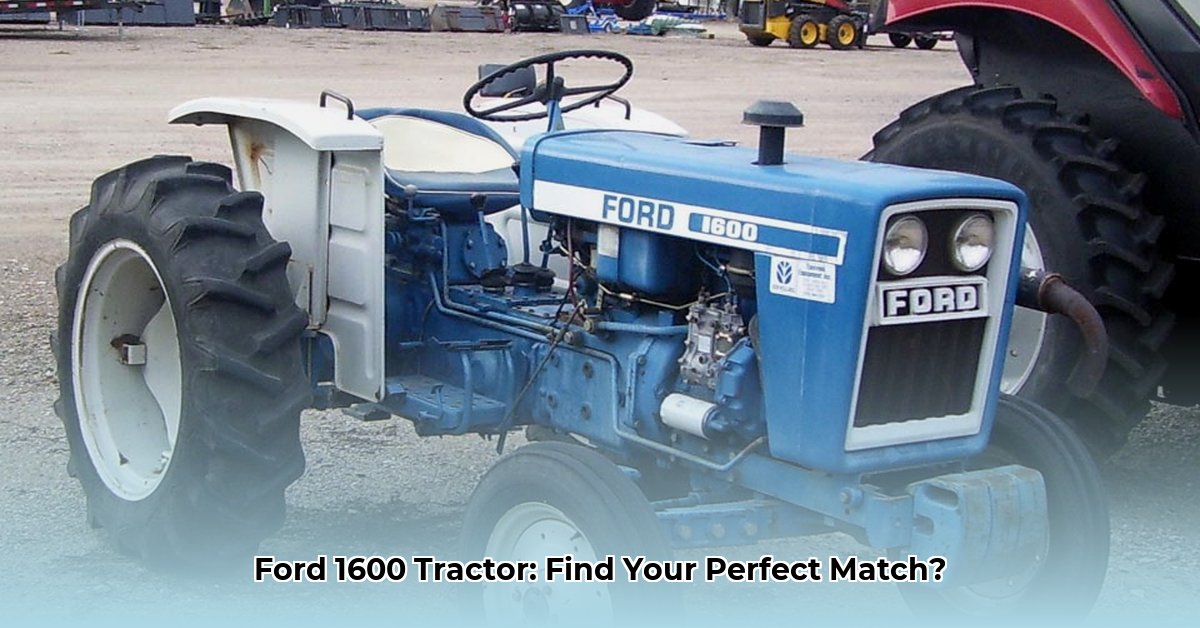
The Ford 1600, manufactured by Shibaura (later Kubota) in Japan during the late 1970s, represents a fascinating chapter in Ford's agricultural history and the broader evolution of compact utility tractors. Unlike many concurrently produced Ford tractors, the 1600 was a product of a Japanese manufacturing partnership, reflecting a global shift in agricultural machinery production. Its design prioritised reliability and efficiency for smaller farms and diverse tasks, mirroring the changing landscape of American agriculture. This sturdy workhorse, though lacking in flashy features, quickly established a solid reputation for dependability. Understanding its origins is crucial to appreciating its enduring appeal and making an informed purchase. For more on Ford tractors of this era, check out this helpful resource: Ford Tractor info.
Technical Specifications & Performance
The Ford 1600 typically boasts a three-cylinder diesel engine, delivering approximately 23-25 horsepower. This power range might slightly vary depending on the source and the tractor's condition. Remember, discrepancies are common with older equipment. Both two-wheel-drive (2WD) and four-wheel-drive (4WD) variants were produced, offering flexibility based on operational needs. The transmission type varied depending on model years and configurations, usually being a manual transmission. Several sources such as TractorData and TractorHouse provide detailed specifications; however, it's crucial to cross-reference for a holistic picture. Consulting original brochures or owner manuals (often found online) helps resolve inconsistencies and provides a more accurate understanding of a specific tractor's features. (A visual aid, such as a diagram or image of the tractor’s key components, would enhance understanding here.) How important is knowing the exact horsepower for your personal needs?
Market Analysis & Valuation
Determining the value of a used Ford 1600 involves several factors. Condition is paramount – a meticulously maintained tractor with low operating hours might fetch $6,000 or more, while a neglected machine might sell for $3,000 or less. These are rough estimates, and the actual price depends on several key factors:
- Condition: Excellent condition is crucial. Wear and tear directly impact resale value.
- Hours of Operation: Lower hours indicate less wear and tear, resulting in a higher price.
- Accessories: Included implements, like a plow or loader, increase overall value.
- Restoration Work: A professionally restored tractor, with documented work, commands a premium.
(A chart or graph visually representing the price range based on condition and hours would further clarify the market analysis.) What is the sweet spot between desired condition and acceptable price for you?
Buyer's Guide/Practical Advice
Buying a used Ford 1600 requires diligent attention to detail. Following these steps minimizes risks:
- Pre-purchase Inspection: Begin with a visual assessment, noting rust, dents, or damage. Examine tires and attachments.
- Engine Check: Listen for unusual sounds. Check fluid levels (engine oil, coolant, transmission fluid). Low levels or contaminated fluids point to potential issues.
- Transmission Test: Shift through all gears, checking for smooth transitions. Grinding sounds indicate wear or problems.
- Hydraulic System: Test the hydraulic lift and other functions. Sluggish operation or leaks require attention.
- Electrical System: Confirm that all lights, gauges, and starter function correctly. Worn wires can lead to costly repairs.
- Test Drive: Operate the tractor, paying close attention to steering, braking, and maneuverability.
Maintenance & Restoration
Regular maintenance is key to longevity. Regular oil changes, filter replacements, and thorough inspections are essential. Parts sourcing might pose a challenge, due to the tractor's age. Online forums, specialized dealers, and even 3D printing offer viable options. Always refer back to original service manuals available online or via enthusiast groups. Why is diligent maintenance crucial for maximizing the lifespan of your Ford 1600?
Conclusion
The Ford 1600, despite its age, remains a desirable compact utility tractor. Its blend of reliability, efficiency, and relatively simple mechanical design makes it appealing to both hobbyists and working farmers. However, a thorough pre-purchase inspection, careful market research, and a commitment to regular maintenance are essential for a successful ownership experience. The enduring appeal of this historic tractor highlights its significance as more than just machinery; it's a testament to reliable engineering and a piece of agricultural heritage.